TL;DR: Omaxe Dwarka unit types fall into three very different categories — retail shop, food court, and multiplex space — and they don’t compete on price so much as on who the tenant will be, how footfall reaches your door, and how much control you keep over the asset. Retail rewards frontage. Food court rewards being inside a footfall system someone else built. Multiplex space is the one most individual investors should leave to institutional buyers.
Three Omaxe Dwarka Unit Types, Not Three Price Points
Walk into a sales office and you’ll get shown all three Omaxe Dwarka unit types in the same breath — retail, food court, multiplex — often on a single comparison sheet that only talks price per square foot. That’s the wrong lens. Each of these is a different business model wearing the same project name.
A retail shop is a stand-alone leasable unit. A food court unit is a small kitchen-and-counter space inside a shared dining hall someone else operates. Multiplex space isn’t a shop at all — it’s usually structured as a co-ownership stake in a cinema operator’s lease, not a unit you can walk into and hand keys over.
Retail Shop: You Own the Frontage, You Own the Risk
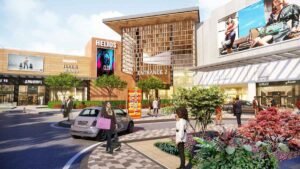
Ground and first-floor retail at Omaxe Dwarka gives you a demarcated unit with its own entrance, its own signage rights, and — critically — its own tenant relationship. You find the tenant, you negotiate the rent, you renew or replace them. Nobody else’s business decisions touch your income directly.
That independence cuts both ways. If the wing you’re in underperforms on footfall, that’s your problem to solve, not the mall management’s. Frontage and floor decide almost everything here: a road-facing ground-floor shop and a same-size unit on an internal corridor rent at very different rates, even in the same building. We’ve walked clients through units that looked identical on the floor plan and turned out to have a 25-30% rent gap once foot traffic patterns were mapped.
Lockable Shop vs Virtual Space — The Real Decision
A lockable shop is a physically demarcated unit you can hand keys to a tenant for. A virtual space is an ownership share in the commercial asset without a demarcated unit attached to it. Both are sold in the same project, often on the same call — and the difference decides what happens to you if anything goes wrong.
Before comparing tickets, pull the project’s buyer document checklist — a lockable shop and a virtual space carry very different paperwork to verify, and that gap matters more than the price difference.
| Lockable Shop | Virtual Space | |
|---|---|---|
| Physical unit | Demarcated, identifiable | Not demarcated |
| Can you lease it yourself? | Yes | No |
| Resale | Sold on its own merits | Depends on buyer appetite for the same structure |
| Primary income source | Rent from your tenant | Developer’s return payout |
| If assured return stops | You still hold a leasable asset | Your recourse is contractual only |
| Entry ticket | Higher | Lower |
Virtual space looks attractive because the entry cost is lower. But you’re buying a promise rather than a property. If the developer’s payouts pause, a lockable shop owner can go find a tenant; a virtual space holder can only go to a lawyer. Verify the project’s registration directly on the Delhi RERA portal before you rely on any assured-return promise.
We tell buyers the same thing regardless of budget: if the lockable ticket is beyond reach, it’s better to wait and build the corpus than to enter through the structure with fewer exits. Compare the current payment plans before deciding which one you can actually get to. For more on this trade-off across the wider project, see our full lockable shop vs virtual space guide.
Food Court: Lower Ticket, Borrowed Footfall
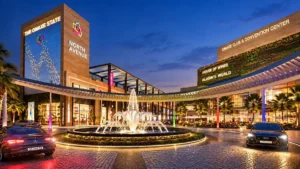
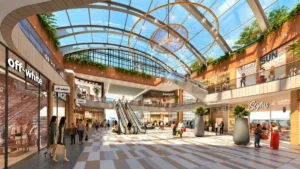
Food court units work differently. You’re not building your own footfall — you’re renting a seat inside a dining hall that the mall’s anchor tenants, cinema, and events calendar are supposed to fill for you. That’s the entire pitch, and it’s a real one in a well-run mall. It’s also a dependency you don’t control.
Ticket sizes for food court space tend to run lower than ground-floor retail, which is exactly why they get pitched to first-time commercial buyers. But the return math depends on operator quality more than location within the food court. A food court with strong anchor tenants and a functioning common-area management team can outperform standalone retail on footfall-per-square-foot. A poorly managed one sits half-empty regardless of how good your unit’s counter position is.
Before booking, ask specifically who’s committed as anchor tenants in the food court zone, and what the shared maintenance and marketing charges look like — these eat into food court economics more than they do standalone retail. We cover current food court pricing and unit sizes in this pricing breakdown.
Multiplex Space: An Anchor Play, Not a Shop
Multiplex or cinema space is the one category where “buying a unit” doesn’t mean what it means for retail or food court. In most commercial projects, multiplex space is pre-leased or co-owned with an operator under a long-term arrangement, and individual investor units — where they exist — function more like a fractional stake in that lease income than a shop you could ever occupy yourself.
Here’s the honest read: multiplex space works as a portfolio diversifier for buyers who already hold retail or food court units and want indirect exposure to the entertainment anchor that drives the whole project’s footfall. It rarely makes sense as a first or only commercial purchase. The income depends entirely on the operator’s business, the lease terms Omaxe negotiated with them, and how long that operator stays committed — none of which you influence.
If the anchor mix is what’s pulling you toward this project in the first place, our overview of Omaxe Dwarka’s 5-in-1 destination format explains how the sports, retail, and entertainment components are meant to work together.
Comparing the Three Omaxe Dwarka Unit Types Side by Side
| Retail Shop | Food Court Unit | Multiplex Space | |
|---|---|---|---|
| Who finds your tenant | You do | You do, within a shared dining hall | Pre-arranged with an operator |
| Footfall source | Your own draw + project footfall | Borrowed from mall/anchor footfall | Entirely operator-dependent |
| Entry ticket | Higher, varies sharply by floor | Generally lower | Structure varies — often fractional |
| Ongoing control | High — your unit, your call | Moderate — bound by mall common areas | Low — operator’s lease terms govern |
| Main risk | Your own leasing execution | Anchor tenant quality, common charges | Operator’s business and lease stability |
| Best suited to | Investors who’ll actively manage a tenant | Lower-ticket first-time commercial buyers | Buyers diversifying an existing portfolio |
How to Actually Decide Between Omaxe Dwarka Unit Types
Don’t start with the price list. Start with how much involvement you want. If you’re comfortable finding and managing your own tenant, retail gives you the most upside and the most control — and it’s the category we steer most first-time Dwarka investors toward when budget allows. If you want a lower entry point and are fine depending on someone else’s footfall engine, food court can work, but only after you’ve checked the anchor tenant list, not before.
Multiplex space, honestly, is the one we tell most individual buyers to skip. It’s not that it’s a bad asset — it’s that it’s the wrong first asset. Diversify into it later, once you already understand how the project’s footfall is actually performing.
One more thing worth checking regardless of unit type: how current pricing compares to launch rate. A unit that’s already run up sharply since 2024 needs a stronger footfall case to justify the entry price than one still close to launch levels. Our launch-vs-current price analysis breaks this down category by category.
Before signing anything, verify the project’s RERA registration — DLRERA2024P0003 — directly on the Delhi RERA portal, and confirm which specific unit category and phase your booking falls under.
Frequently Asked Questions
Which Omaxe Dwarka unit type is better: retail shop or food court?
Neither is universally better — they suit different investors. Retail shops give you full control over tenant selection and typically higher returns for road-facing, ground-floor units, but require active management. Food court units cost less to enter and rely on the mall’s overall footfall and anchor tenants, making them lower-effort but more dependent on factors outside your control.
Can I buy multiplex space individually at Omaxe Dwarka?
Multiplex space is typically structured differently from standalone retail or food court units, often involving co-ownership or fractional participation tied to the cinema operator’s lease rather than a demarcated shop. Ask the developer directly for the exact ownership structure, the named operator, and the lease terms before treating it as comparable to a regular unit purchase.
Which unit type has the lowest entry price at Omaxe Dwarka?
Food court units generally carry a lower entry ticket than ground-floor retail, which is why they’re often pitched to first-time commercial investors. Exact pricing varies by phase and floor, so request the current price list and compare it against launch-era rates before assuming a category is “cheap” relative to its earning potential.
Does floor level matter more for retail or food court units?
It matters most for retail, where ground-floor, road-facing units command a significant premium over upper floors because tenants pay for direct visibility and walk-in access. Food court units sit within a shared dining zone, so counter position within that zone matters more than floor level in the building overall.
What should I check before choosing between Omaxe Dwarka unit types?
Check how much day-to-day involvement you’re willing to take on, the anchor tenant commitments for that specific zone, common-area maintenance charges, and how current pricing compares to the 2024 launch rate. Verify RERA registration DLRERA2024P0003 on the Delhi RERA portal and confirm the exact unit type and phase in writing before booking.
Talk to Us Before You Pick a Unit
Retail, food court and multiplex space are not interchangeable Omaxe Dwarka unit types — the right one depends on your budget, your appetite for hands-on management, and what you already hold in your portfolio. We’ll walk you through current availability across all three categories and the specific frontage, anchor-tenant and pricing details for each. Call or WhatsApp 9870374557 for a no-pressure comparison.
*Pricing, anchor tenant commitments and ownership structures mentioned are indicative and subject to change. Verify all commercial terms and RERA registration independently before investing.